FXPHD: Realistic Destruction Workflows – HOU230
May 6, 2026
Description
## Class Listing
#### Class 1: Destruction Workflow Overview & Custom Fracturing
An overview of mentalities and workflows for large and complex destruction simulation. Using pre-made tools is good for a start, but custom fracturing is the key to getting a fast and reliable look from destruction. In this class, low level geometry processes will be used to create an incredibly efficient and direct-able fracture pattern.
#### Class 2: Constraint Setup and Uses
Constraints are the life-blood of a destruction simulation. In this class, core constraint concepts and logic are applied to create highly specific constraint relationships.
#### Class 3: The Cone-Twist Constraint
The special needs of the rotational cone-twist constraint type are discussed in detail and applied in a simple test scenario.
#### Class 4: Cone-twist Application
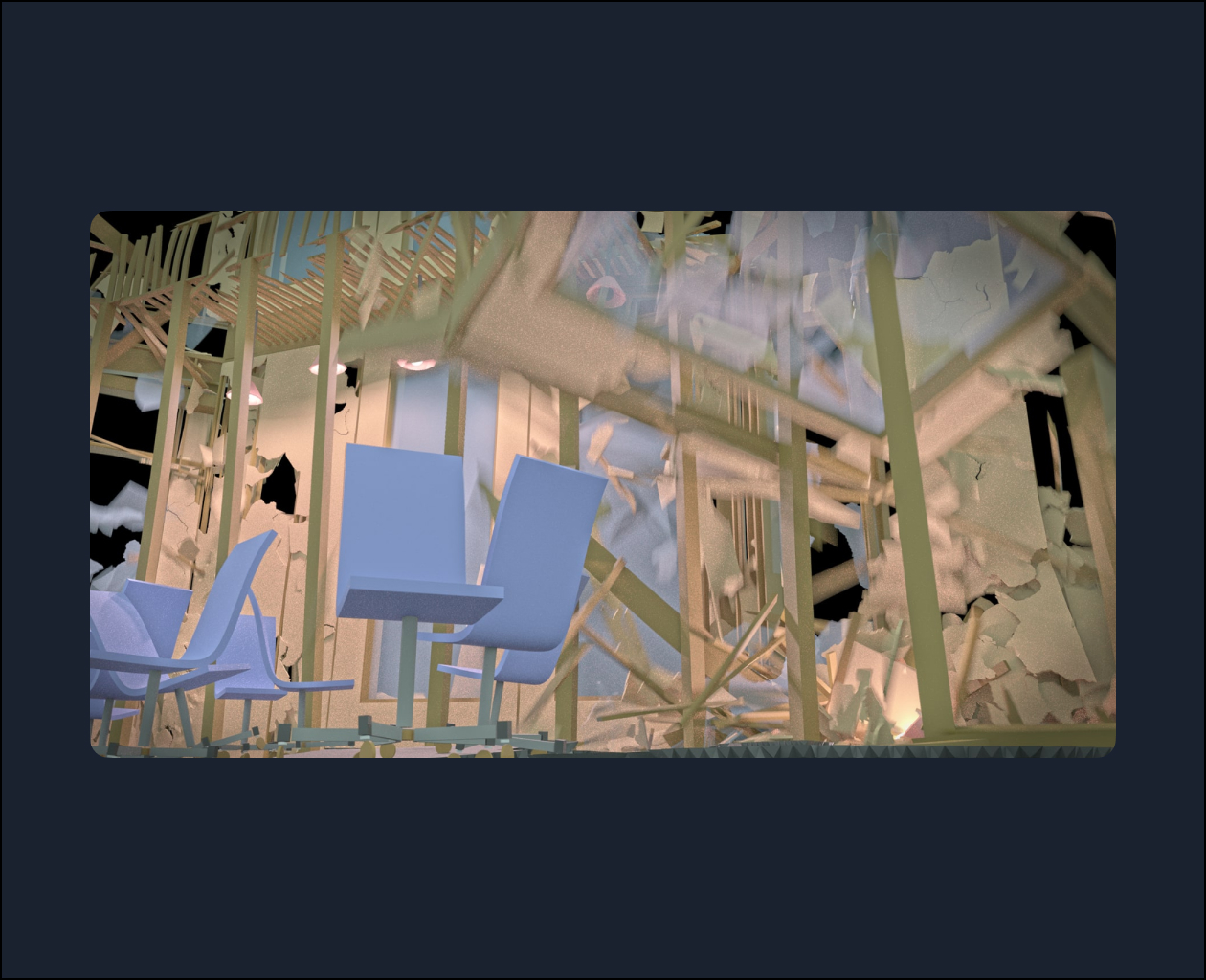
The use and application of the cone-twist constraint type is clearly on display in a highly rotational and complex object: an office chair with wheels. Practice in applying this constraint type will aid in previously difficult simulations involving bending, breaking, or mechanical parts.
#### Class 5: Dynamic Bending and Breaking
Constraint workflows are applied to create highly specialized and powerful relationships between rigid objects to mimic soft body technology for a blazing performance and stability improvement.
#### Class 6: Simulation Micro-testing
The science and art of orchestrating larger destruction scenes is crafted through rigorous testing and organizational practices.
#### Class 7: Global Constraint Relationships
This class sets its sights wide and all encompassing with a move into larger constraint relationships between major objects and material types.
#### Class 8: Sculpting Simulations with Transforms and Timing
The distortion of time and 3D space is a highly underused and powerful methodology when approaching rigid body simulations. Here a normally cumbersome and heavy simulation is broken into small and directable parts using time manipulation.
#### Class 9: Taking Control of Heavy Simulations
A heavy simulation often strikes fear into juniors and seniors alike and can lead to long iteration times and cumbersome workflows. In this class, you will see how a heavy simulation may be approached and navigated with speed and control.
#### Class 10: Dynamic Surfacing
The final phase of any destruction shot is producing a renderable result from low resolution or proxy objects. In this class, the art of surfacing with low level and highly efficient geometry operations is taught and demonstrated for changing topology as well as splintering effects.
Topics: Houdini
Source: https://madbax.org/fxphd-realistic-destruction-workflows-hou230/