Creating Realistic Cliff Materials using Substance Designer | The Gnomon Workshop
August 1, 2026
Description
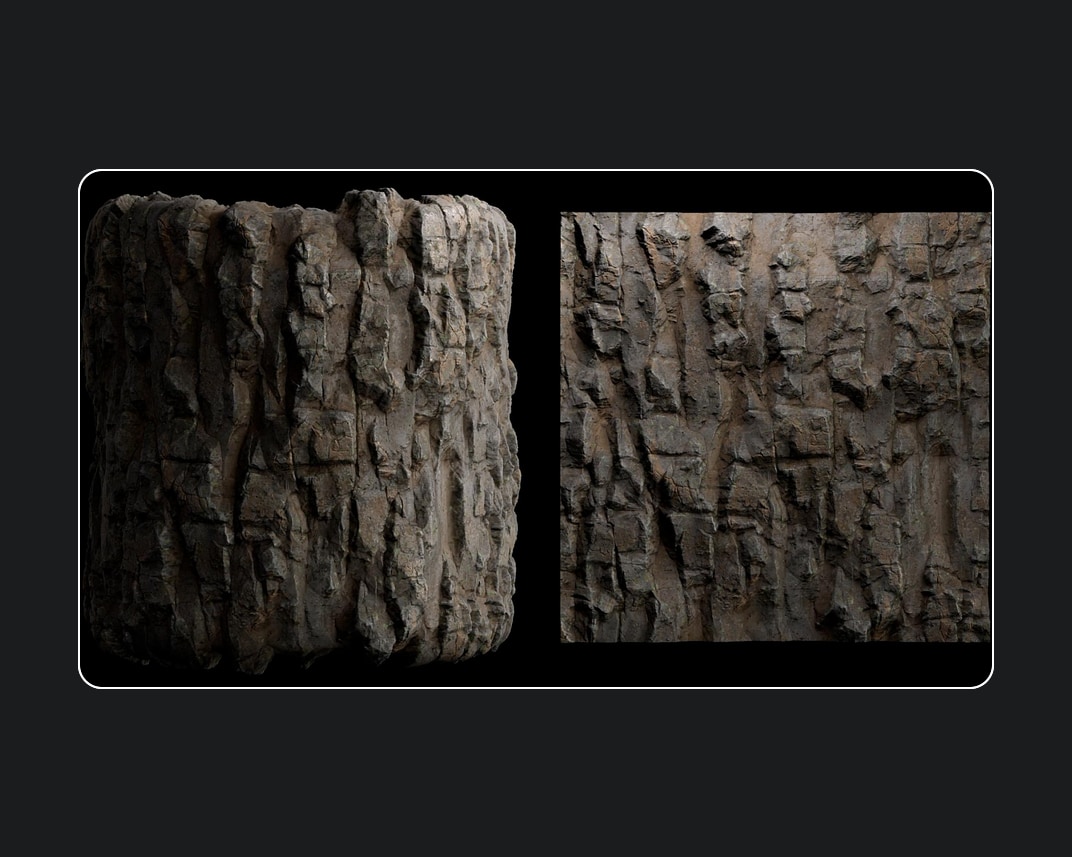
This comprehensive 4-hour workshop by Senior Lead Content Artist Vincent Dérozier focuses on creating realistic cliff surfaces in Substance Designer, placing a strong emphasis on balancing high levels of surface detail with clear visual readability. Believable natural materials require an understanding of how shapes, forms, and details work together to create surfaces that are visually appealing and natural. Throughout the lessons, artists learn how to build a polished, production-ready cliff material from the ground up and transform it into a complete material collection with cohesive variations suitable for games, cinematics, and real-time environments.
The training explores the fundamental building blocks of material creation, starting from primary shapes and large-scale forms to secondary breakups, erosion patterns, and fine surface detailing. Artists learn to organize these layers procedurally within a clean, efficient graph structure. The course also covers advanced color development, roughness map creation, graph optimization, and reusability strategies to ensure materials remain visually rich, scalable, and optimized for production pipelines.
The curriculum includes the following modules:
• 01 Introduction: Workshop objectives, instructor background, reference image analysis, and render previews.
• 02 Main Shapes: Building foundational material structures, base shapes, controlled breakups, and hierarchical node setups.
• 03 Mid Shapes & Surfacing: Defining secondary forms, stepping effects, volume merging, chiseling, cracks, and surface porosity.
• 04 Color – Part 1: Applying color theory and procedural techniques using custom noises, gradient maps, mineral deposits, and patina.
• 05 Color – Part 2: Layering frequencies, pigments, leaks, and edge details to control visual rhythm and readability anchored to height data.
• 06 Roughness: Developing roughness variation, sediment flow patterns, thickness-driven details, and embedded stone textures.
• 07 Optimization: Graph cleanup, node simplification, and performance efficiency techniques for real-time production.
• 08 Reusability: Extending the base graph to generate alternative heightmaps and scalable material variations.
• 09 Wrap-Up: Final refinements, render analysis, and deterministic workflows for studio pipelines.
This workshop is designed for environment artists, texture artists, and material creators looking to improve their procedural texturing workflow. Only a basic understanding of Substance Designer’s interface and core concepts is required, as each step and parameter is clearly explained. Primary software used includes Substance Designer and Unreal Engine.